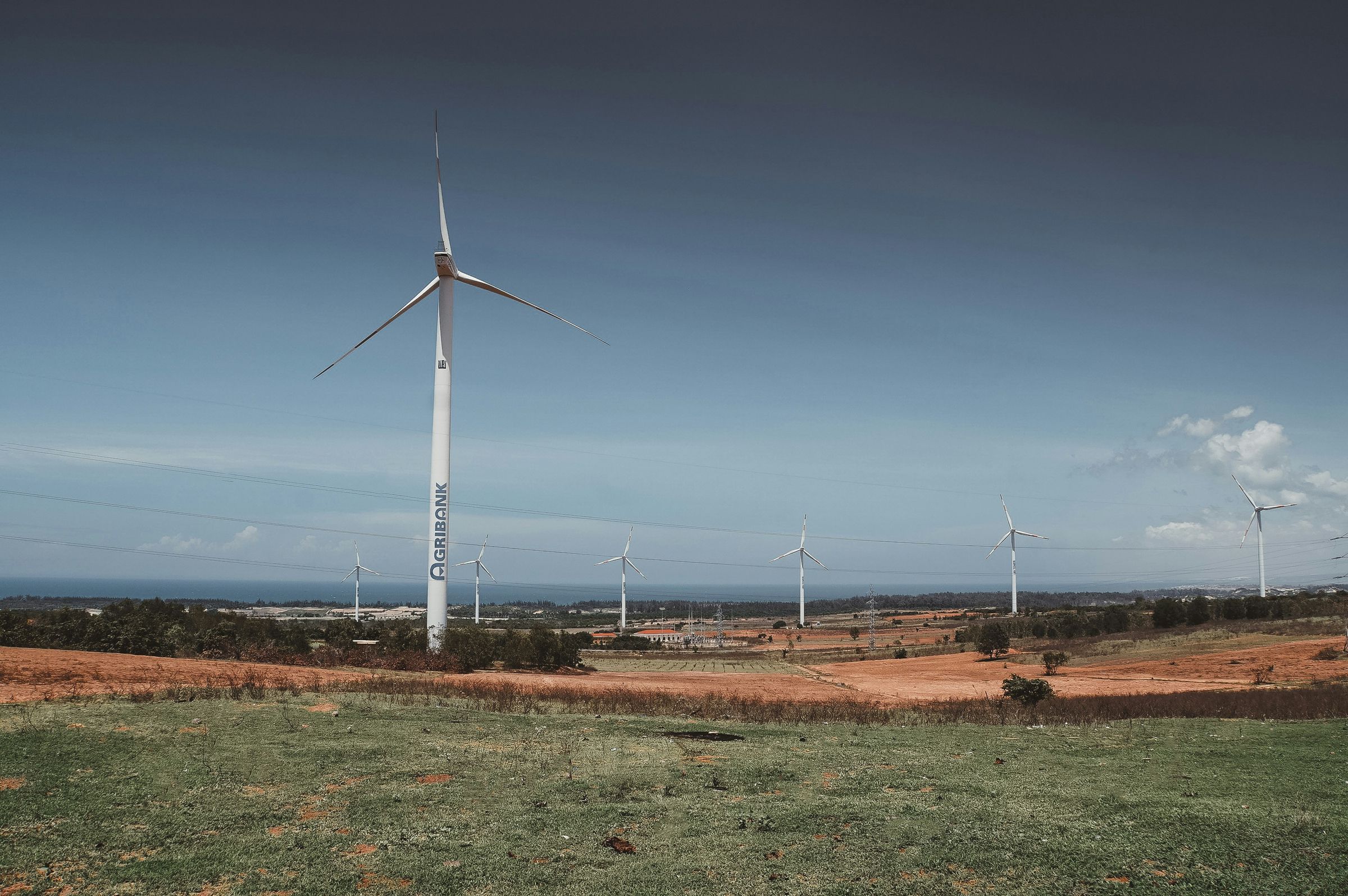
Vietnam is one of Southeast Asia's fastest-growing manufacturing hubs, demanding an immense supply of reliable power towards its short-term 2030 and long-term net-zero goals for 2050. While the country saw an unprecedented boom in solar and wind capacity; it has reverted to fire-coal production (54.5%) of energy production to subsidise the hydro-electric production shortfall in 2026 due to the drought and increased domestic usage.
Where do the opportunities and obstacles lie for Vietnam in relation to grid capacity, transmission infrastructure and bankability?
Our three speakers
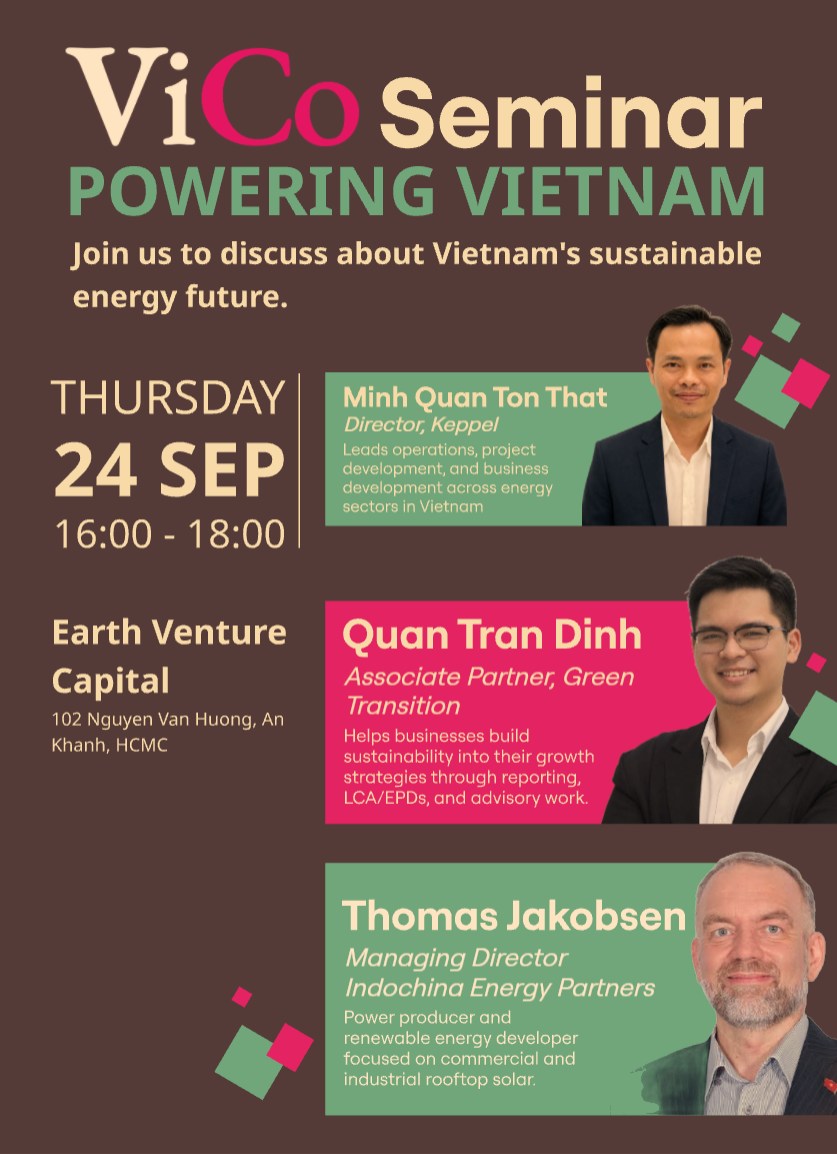
Minh Quan Ton That
Director, Keppel
Leads operations, project development, and business development across energy sectors in Vietnam
Quan Tran Dinh
Associate Partner, Green Transition
Helps businesses build sustainability into their growth strategies through reporting, LCA/EPDs, and advisory work.
Thomas Jakobsen
Managing Director
Indochina Energy Partners
Power producer and renewable energy developer focused on commercial and industrial rooftop solar.

What will power the Vietnam of tomorrow? Three experts talk about the past, present and future of Vietnam's power supply, their insights in the industry, and beyond.
This outline document gives you background information on the current state of Vietnam's energy system, where it came from, and what options lie before it.
15:30-16:00 - Guest Arrival
16:00-16:15 - Key Note from Earth VC
16:15-16:20 - Opening
16:20-16:50 - Panel Discussion
16:50-17:00 - QnA
17:00-17:15 - Panel Summary & Photos
17:15-17:50 - Networking
17:50-18:00 - Closing Remarks